

Buying an Expensive or Large Finca in Colombia? Here Is What You Should Verify Before Signing

Buying a finca in Colombia can be an excellent lifestyle or investment decision. However, rural properties often involve legal, territorial, technical and security considerations that are not visible in photographs or explained in a property advertisement.
A beautiful house, productive land or an attractive asking price does not automatically mean the property is ready for a safe transaction.
This is particularly important when purchasing:
Large or high-value rural properties
Farms and agricultural land
Tourism and hospitality properties
Properties with rivers, forests or natural attractions
Land intended for development or subdivision
Properties located far from major cities
Fincas being purchased from abroad
Before signing a purchase agreement or transferring a substantial deposit, the buyer should understand exactly what is being purchased—and identify any risks that could affect ownership, access, development, security or future resale.

A title certificate is necessary, but it is not enough
One of the first documents normally reviewed in Colombia is the Certificado de Tradición y Libertad, the official property record issued by the Superintendence of Notaries and Registration.
This certificate can provide valuable information about:
The registered owner
Previous ownership transfers
Mortgages
Liens and court measures
Registered easements
Restrictions affecting the property
Other entries recorded against the title
However, a clean certificate does not necessarily confirm that everything physically shown to the buyer belongs to the property.
It may not reveal discrepancies involving boundaries, occupation, road access, actual land use, unregistered constructions or the physical condition of the buildings.
For this reason, the title certificate should form part of a broader review.
Confirm the property’s area and boundaries
Boundary and area discrepancies are among the most important risks when buying rural land in Colombia.
The area stated in the deed may differ from:
The area registered in the property title
The cadastral information
The seller’s description
The fences or boundaries visible on the ground
The area represented in maps or property advertisements
In some cases, a buyer may believe they are purchasing a specific number of hectares, only to discover that part of the land is occupied by a neighbour, located outside the registered boundaries or affected by a measurement inconsistency.
For large or valuable properties, a qualified surveyor may be needed to:
Identify the physical boundaries
Confirm coordinates and measurements
Compare the land with cadastral and registry records
Detect overlaps or possible encroachments
Verify whether fences correspond to the legal boundaries
Produce a professional topographical report
The Colombian Ministry of Justice specifically recognises procedures for correcting inconsistencies involving property areas and boundaries. This demonstrates why these discrepancies should be identified before completing the purchase.
Compare the deed, registry and cadastral information
These records serve different purposes and should be compared carefully.
The review may include:
The public deed
The Certificado de Tradición y Libertad
The cadastral certificate
Available cadastral maps
Property tax records
Previous survey documents
Municipal planning information
The Colombian cadastral authority, IGAC, explains that cadastral information can include the physical, economic and legal characteristics associated with a property.
Any differences between the documents should be understood before the buyer signs or transfers funds.
Verify legal and practical access
A finca may appear to have a road leading to it, but that does not always mean the buyer has a legally protected right to use that road.
The access route could:
Cross another person’s property
Depend on an informal agreement with a neighbour
Be affected by a gate or seasonal restriction
Lack a registered easement
Become difficult or unusable during heavy rain
Require maintenance shared with other owners
Access is especially important for agricultural, tourism and development projects. A property that is difficult to reach may have higher operating costs and a lower resale value.
The review should therefore consider both legal access and actual access conditions.
Confirm permitted land use
The buyer should not assume that every activity can be carried out on rural land.
Before purchasing, it may be necessary to confirm whether the property can legally be used for:
Agriculture or livestock
Tourism accommodation
Events or hospitality
Residential construction
Commercial activities
Warehouses or production facilities
Subdivision or development
Environmental or conservation projects
Land-use rules depend on the municipality and the applicable territorial planning regulations. A property may be attractive but unsuitable for the project the buyer has in mind.
Colombia’s official business portal provides access to municipal land-use consultation procedures.
Investigate the land’s legal history
Some rural properties require an additional review of their origin and legal history.
Depending on the case, it may be necessary to examine:
Previous adjudications
Agrarian proceedings
Possible public-land history
Rural subdivision restrictions
Family Agricultural Unit regulations
Restitution or land-related proceedings
Protected areas or environmental limitations
These issues can be complex. When a warning sign appears, the matter should be reviewed by a Colombian lawyer with relevant experience.
The National Land Agency provides official information about rural land, adjudications and applicable agrarian procedures.
Check water, utilities and essential services
A river, spring or reservoir located on or near the finca does not automatically give the buyer an unrestricted right to use that water.
The review may need to establish:
The source of the water supply
Whether water is available throughout the year
Existing water-use permits or concessions
The condition of wells, pumps and storage systems
Electricity availability and capacity
Wastewater and septic systems
Internet and mobile coverage
Irrigation infrastructure
Any environmental restrictions
For an agricultural or tourism project, insufficient water or unreliable utilities can substantially change the real value of the property.
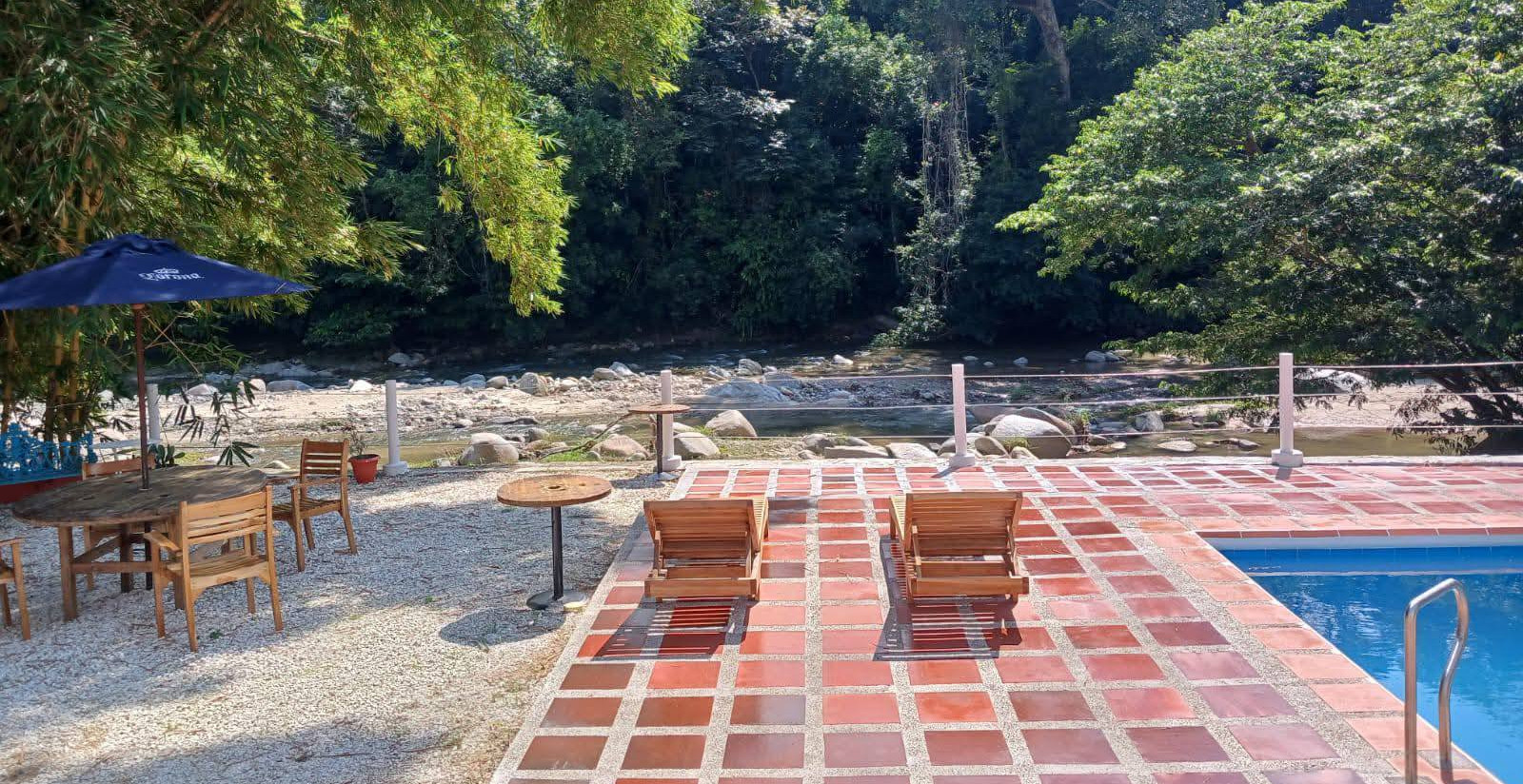
Inspect buildings and infrastructure
An attractive rural house may conceal expensive structural or maintenance problems.
Depending on the property, an engineer or technical professional may inspect:
Structural condition
Roofs and foundations
Moisture and drainage
Retaining walls
Electrical installations
Water and wastewater systems
Internal roads and bridges
Agricultural or tourism infrastructure
Whether important constructions appear in the available records
A technical inspection is especially valuable when the property includes several buildings, tourism facilities, swimming pools, stables, production areas or structures built on steep land.
Evaluate territorial and security conditions
The security review should not be limited to checking crime statistics online.
For certain high-value, isolated or extensive properties, the buyer may benefit from a private territorial and security assessment performed by an accredited private security professional.
Depending on the property and the authorised scope of the assignment, the assessment may consider:
Access routes and possible vulnerabilities
Isolation and response times
Perimeter conditions
Neighbouring activity
Local operating conditions
Security requirements for residents, workers or guests
Recommended preventive measures
Risks associated with the property’s intended use
This is a private professional evaluation. It is not a police certificate, does not represent an endorsement from the Colombian National Police and cannot guarantee that a future security incident will never occur.
Its purpose is to help the buyer understand the property’s conditions and make a better-informed decision.
Does every finca need every specialist?
No.
A small recreational finca does not require the same level of review as a large agricultural estate, a remote property or a multimillion-dollar tourism project.
The professionals involved may include, when necessary:
Real-estate lawyers
Surveyors
Civil or structural engineers
Architects
Environmental specialists
Agronomists
Accredited private security professionals
The scope should be determined according to the property’s location, size, value, intended use and identified warning signs.
This avoids unnecessary costs while ensuring that significant risks receive specialist attention.
What can happen when a finca is not properly verified?
Skipping the review can expose the buyer to problems such as:
Purchasing less land than expected
Boundary conflicts with neighbours
Lack of legally protected road access
Restrictions on the intended commercial activity
Unauthorised or unregistered constructions
Expensive structural repairs
Problems obtaining water or essential services
Agrarian, environmental or title complications
Unexpected territorial or security conditions
Difficulty financing or reselling the property
Legal expenses that exceed the cost of verification
In high-value or extensive rural properties, even one unidentified issue can represent a substantial financial loss.
What should the buyer receive?
Depending on the selected scope, the final delivery may include:
A summary of the documents reviewed
Identified inconsistencies and warning signs
Photographic evidence
Territorial observations
Professional conclusions
Recommended additional checks
Reports signed by the appropriate specialists
A clear list of issues to resolve before proceeding
The purpose is not to create unnecessary fear. It is to give the buyer clearer information before making an important financial commitment.
Compra Segura is GrandColombia’s coordinated property-verification service for buyers considering a finca or rural property in Colombia.
The property does not need to be listed by GrandColombia.
Depending on the case, the service can coordinate documentary, territorial, technical and private security reviews, with conclusions provided by the appropriately qualified independent professionals.
GrandColombia coordinates the process and helps the buyer understand the findings. Legal, engineering, surveying and security conclusions are prepared and signed by the responsible specialists.
Before you buy a finca, discover what the photographs do not show.
Request an initial assessment and tell us where the property is located. We will explain the recommended scope and provide a personalised quotation.



Comentarios